
The journal
Stories from the craft, written at the press.
Screen printing has more than a century of good stories: people who did a lot with very few inks, and posters that changed how a street looks. Here are some of them, with the facts we find remarkable and what we still learn from them at the press every day.
The craft today
Screen printing or DTF: which one suits you, and why it is not a matter of taste
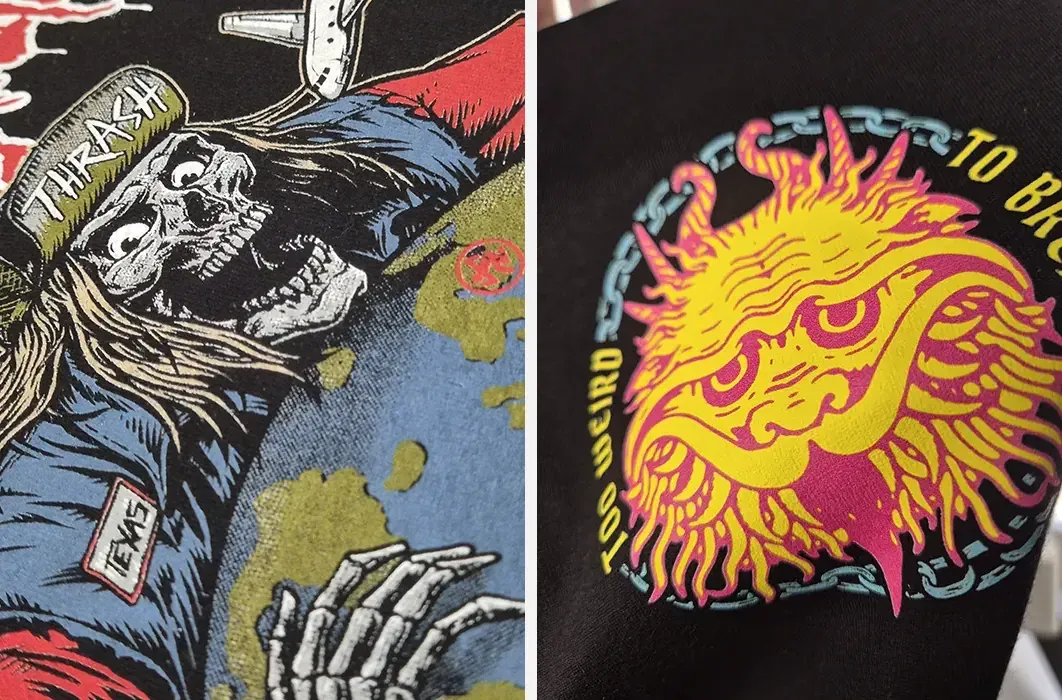
It is the question we get most often after «how much». The short answer fits on one line: a few flat colours, screen printing; a photograph or a gradient, DTF. The long one has numbers, and one of them surprises even people who already know what each one is. Here it is in full, with what we look at in the workshop before telling you which one your design needs.
8 min read
Read the article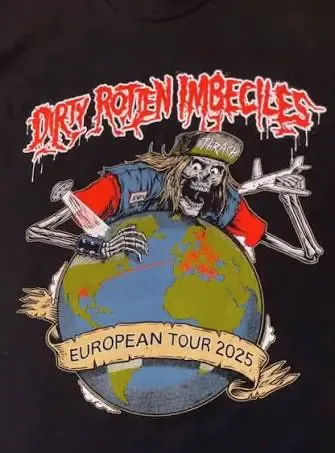
The craft today
How tour merch gets made
For a lot of bands, the merch table is what ends up paying for the van. That makes tour shirts a question of calendar and numbers before it is a question of design: how many, in which sizes, when they need to be ready and what happens when they run out halfway. Here it is from the workshop's side, with the lead times and minimums we actually work with.
7 min read
Read the article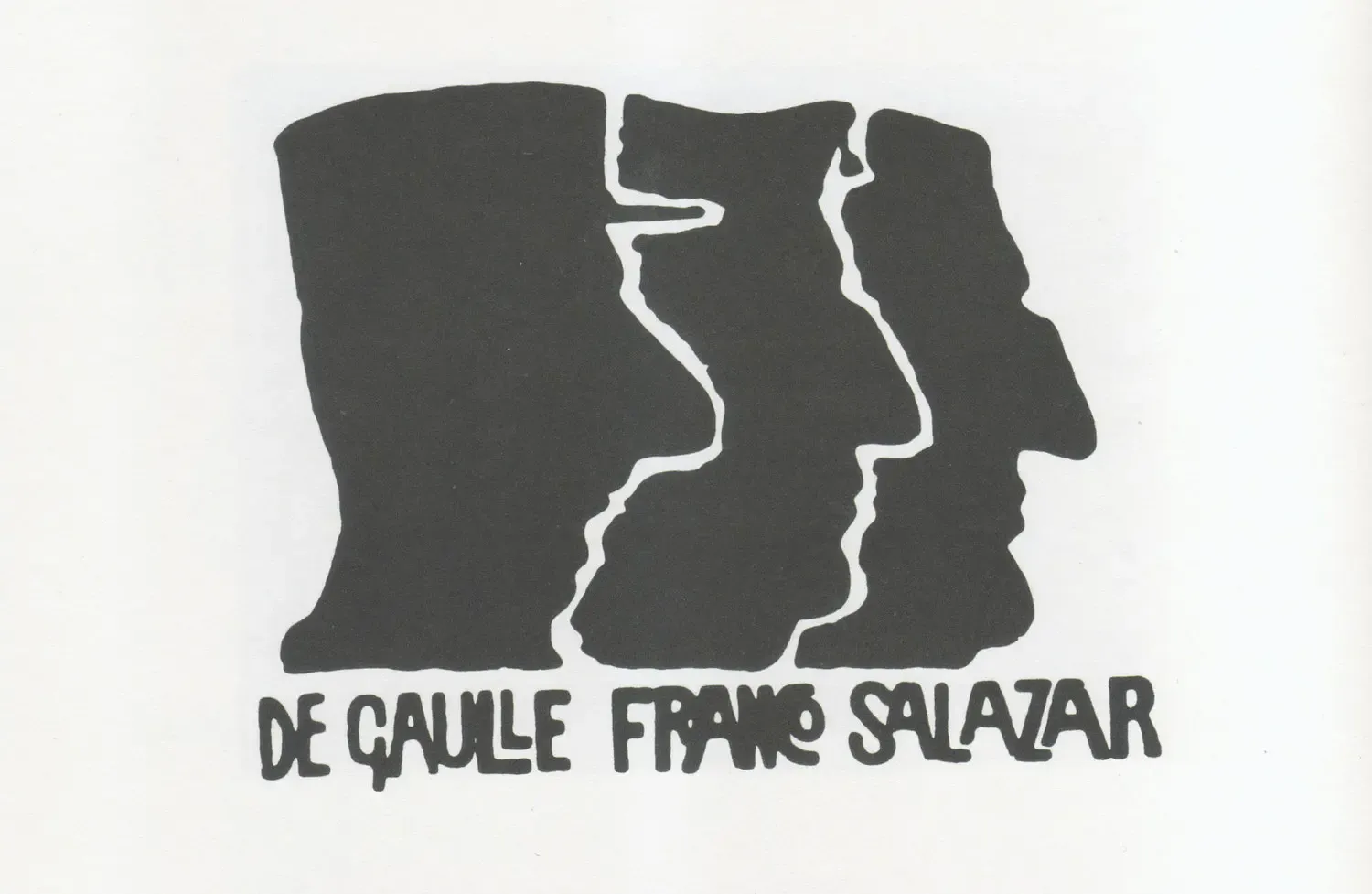
History of the craft
Screen printing in the street: from May 68 to the rent strike
Every time a lot of people have wanted to say one thing at once, someone has set up a screen in a room and started printing. It happened in Paris in 1968, in Berkeley in 1970, in Gaborone in 1983 and in Barcelona in 2009. It is happening now: at the housing marches across Spain and in the blockaded schools and universities of France this October, what people wear and what they paste on the wall very often comes off a squeegee. Here is why it is always the same tool.
10 min read
Read the article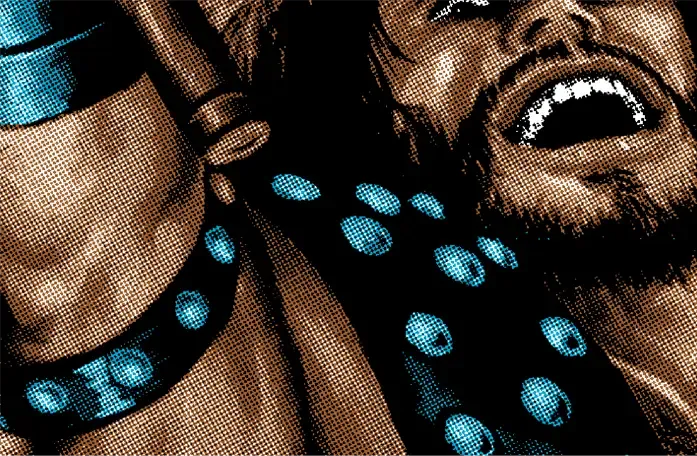
The craft today
How to prepare your artwork so it can be printed
This is the page that saves half a dozen emails per job. It is not a design manual: it is what we need to know about your file before we make any screen, why we ask for it, and what happens when it is not there.
8 min read
Read the article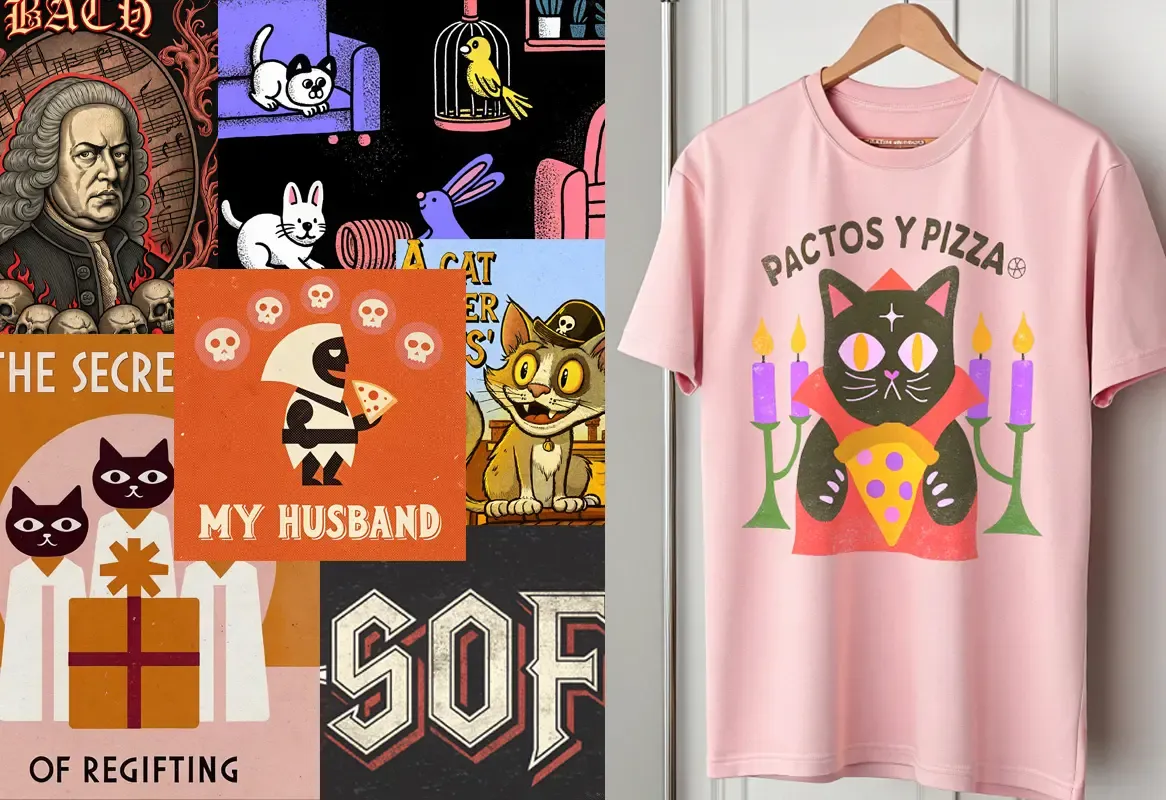
The craft today
You generated the design with AI: here is what it still needs before it can be printed
Every week we receive files made with an image generator. The idea is usually good and the artwork looks great on a phone. The problem is elsewhere: the file looks finished and it is not. Here is exactly what is wrong with it and what we do at the workshop so that it prints well.
9 min read
Read the article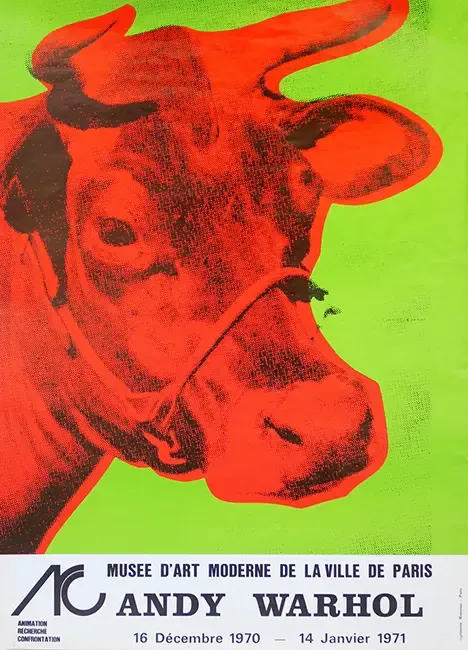
History of the craft
Warhol and the Factory: when screen printing went from the sign shop to the auction room
He drew shoe adverts. In 1962 he swapped the brush for a screen, set up a studio lined with aluminium foil and said he wanted to be a machine. Sixty years later one of those prints is the most expensive work by an American artist ever sold at auction. Here is the part that usually gets skipped: how they were made.
8 min read
Read the article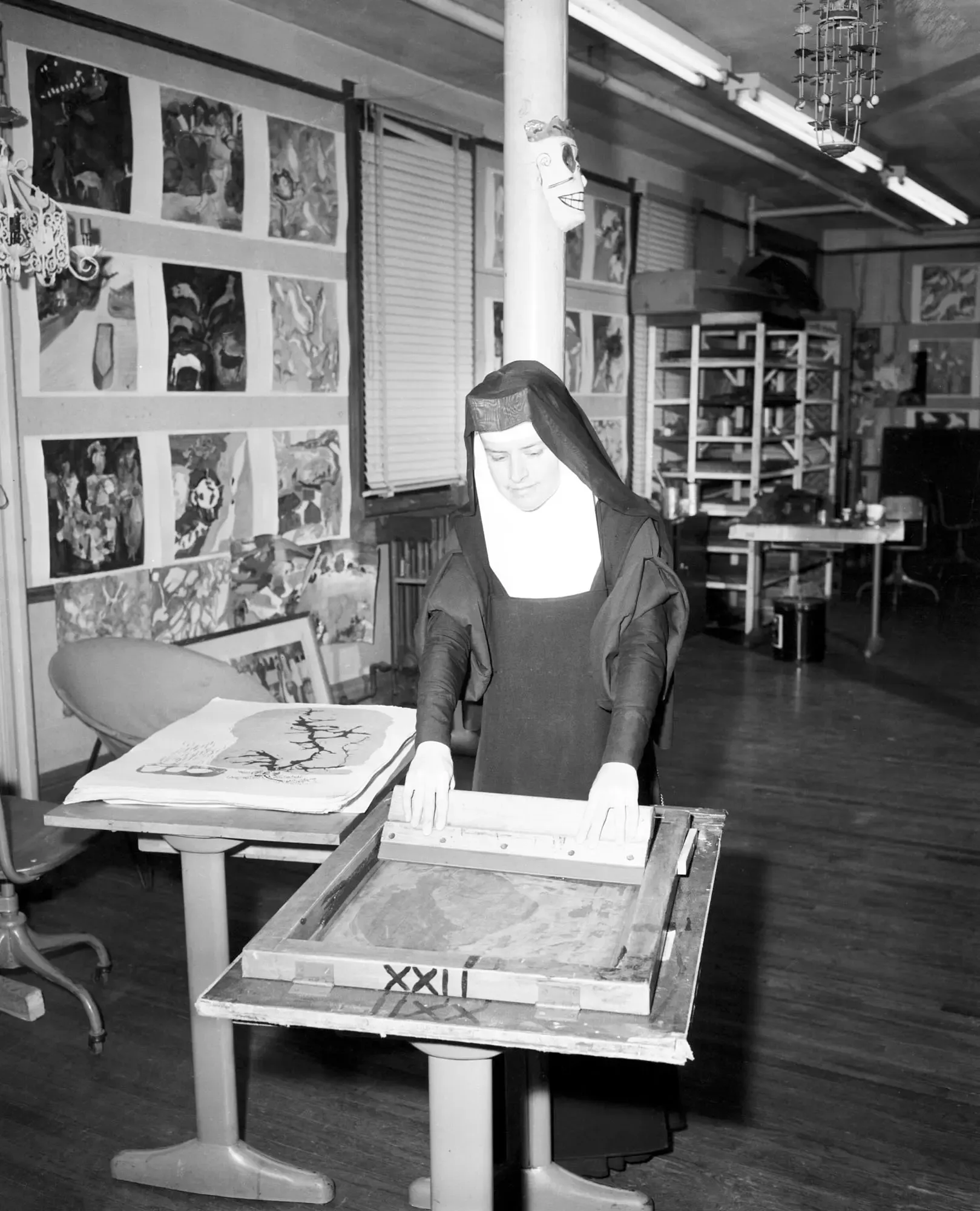
History of the craft
Mary Corita Kent: the nun who screen-printed supermarket slogans
She made some eight hundred serigraphs, turned sliced-bread advertising into poetry, taught with ten rules still pinned up in classrooms, and ended up designing a stamp printed seven hundred million times. She did nearly all of it from a school in Los Angeles, with a squeegee in her hand.
7 min read
Read the article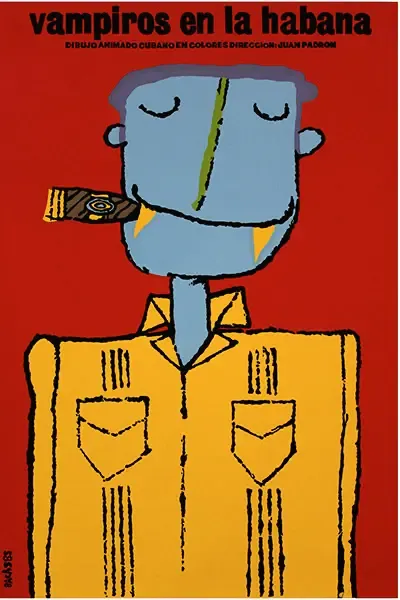
History of the craft
Cuban film posters: when a lack of means invented a language
With no coated paper, no photographs of the stars and barely half a dozen inks, the designers at ICAIC produced one of the most admired poster collections in the world between 1960 and 1980. They did it with screen printing, and not by choice: it was the only technique within reach.
7 min read
Read the article
Ready when you are
Tell us what you want to print.
Configure it in two minutes or write to us: a person from the workshop replies, usually within one business day.