
The craft · Stampa
Screen printing or DTF?
Every week someone asks me why I won't screen print them a full-colour photo, or why I tell them twenty T-shirts aren't worth doing with screens. The answer fits in one email, and this is it.
It's not a matter of taste. Each technique does something better than the other, and what I want is for you to pick the one that gives you the T-shirt you have in mind, not the one that gives me more work.
This is a translation of the email, which we send in Catalan. To get the next ones, sign up.
Sign up to the newsletterWhat each one is, in two sentences
Screen printing is ink pushed through a mesh: one screen per colour, and the colour sits on the fabric with some body. That's why it has that feel and that density, and why it stands up so well to washing.
DTF prints the design in full colour onto a film, a powder adhesive goes on, and it's transferred to the garment with heat. There's no limit on colours or gradients, and no screens to make.
When it's screen printing
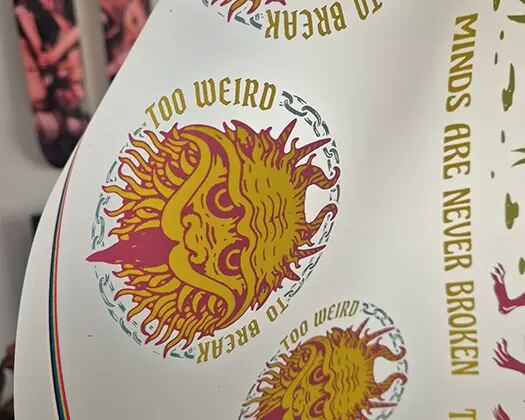
When the design has a few flat colours, up to six per position, and the run is worth it: from 25 units. Logos, text, illustration in flat shapes. It's the one that looks best on dark garments, because the white base underneath keeps the colour strong, and the only one that takes special finishes: fluorescent, metallic, discharge ink.
When it's DTF
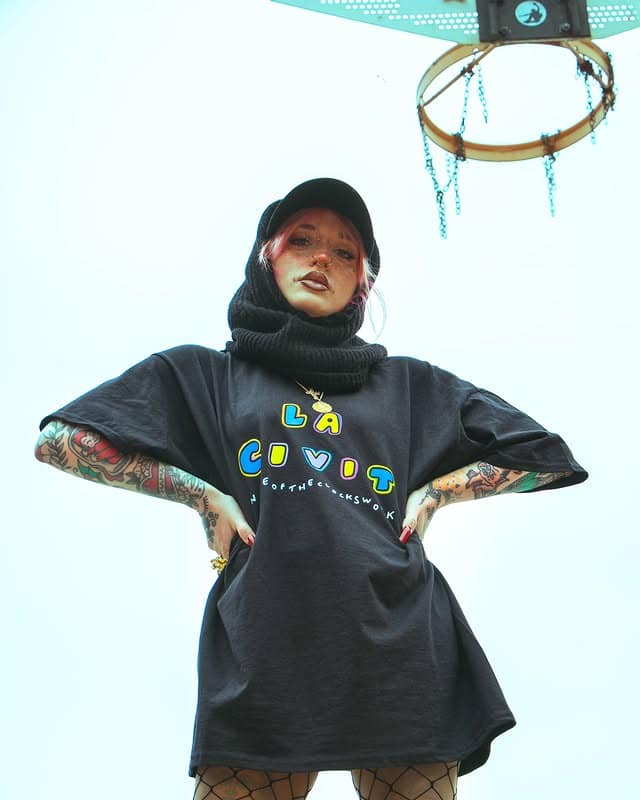
When the design is a photo or has gradients and the run is short, or when it has more colours than it makes sense to separate. It's charged by position and design size, not by colour, and the garment isn't included: you bring it, or you choose one from our supplier's catalogue. It stands up well to washing, but it feels like a transfer: flatter and a little stiffer than ink.
And a photo?
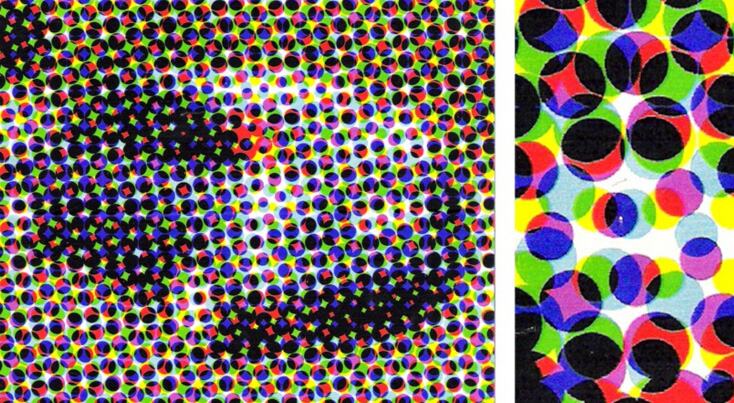
Screen printing can do it too, in four-colour process: four screens, plus the white base on a dark garment, and a halftone dot pattern that, done well, looks very good and has the feel of ink. But it costs more, because it means more screens and more prep, and it only pays off on a long run.
For twenty or thirty pieces, DTF gets you the same photo sooner and for less. What I'll never tell you is to make four screens for a short run. If you're not sure, send me the design and I'll tell you which technique it needs before we talk about anything else.
Numbers to keep handy
- Screen printing, minimum
- 25 units per design
- 1-ink T-shirt, screen printed
- €6.50 a unit at 25 units; €5 from 100. Garment and screen included
- Inks per position
- Up to 6 in screen printing. In DTF, as many as you like
- DTF
- By position and design size, garment not included. We'll give you the price once we've seen the design
- Usual lead time
- 10–14 working days from proof approval
Guide prices from the 2026 price list, excluding VAT. The configurator works them out for your order.